
From Bystander to Lifesaver: Get CPR Certified to Perform Life Saving Skills
If someone is drowning in a pool and you need to perform CPR, it is important to act quickly and efficiently. Here are the steps for performing CPR:
- Check the Scene: Before approaching the person in the pool, ensure that the scene is safe for you to approach. Look out for any potential hazards that could put you in danger, such as electrical wires, chemical spills, or slippery surfaces.
- Check for Responsiveness: Once you have determined that the scene is safe, check to see if the person is responsive by tapping or gently shaking their shoulder and calling out their name. If they do not respond, proceed with the following steps.
- Call for Help: Call out to someone nearby to call 911 or emergency services, and to bring an automated external defibrillator (AED) if available. If you are alone, call 911 first and then start CPR.
- Position the Person: Carefully roll the person onto their back, and support their head and neck with your hands. Tilt their head back slightly to open the airway.
- Check for Breathing: Place your ear close to the person’s mouth and nose and listen for breathing, while also looking for chest movement. If the person is not breathing, proceed with the following steps.
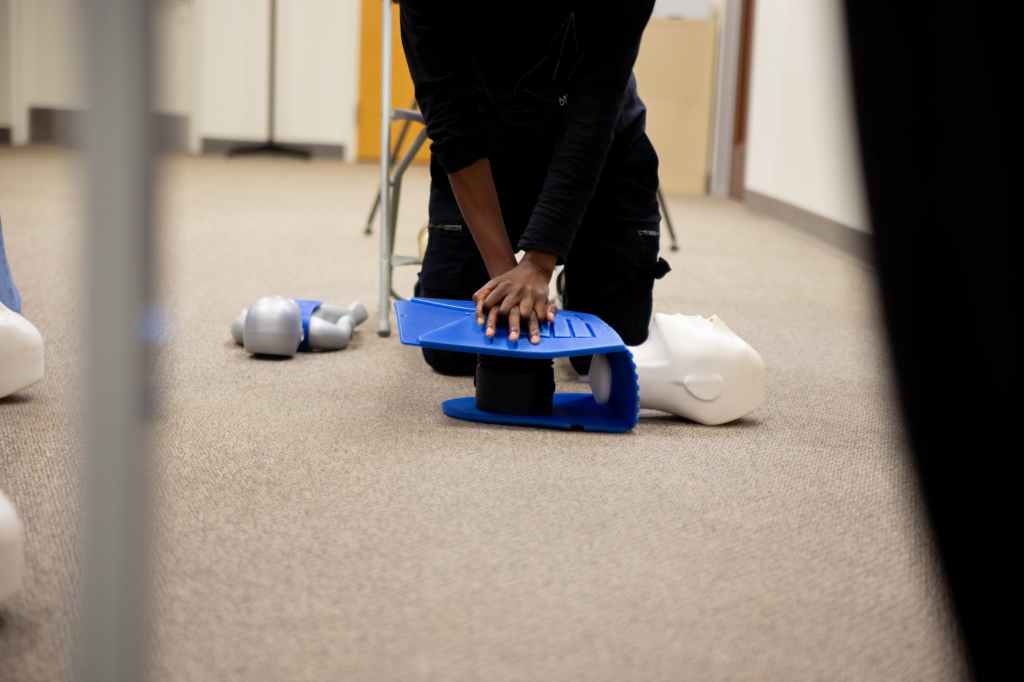
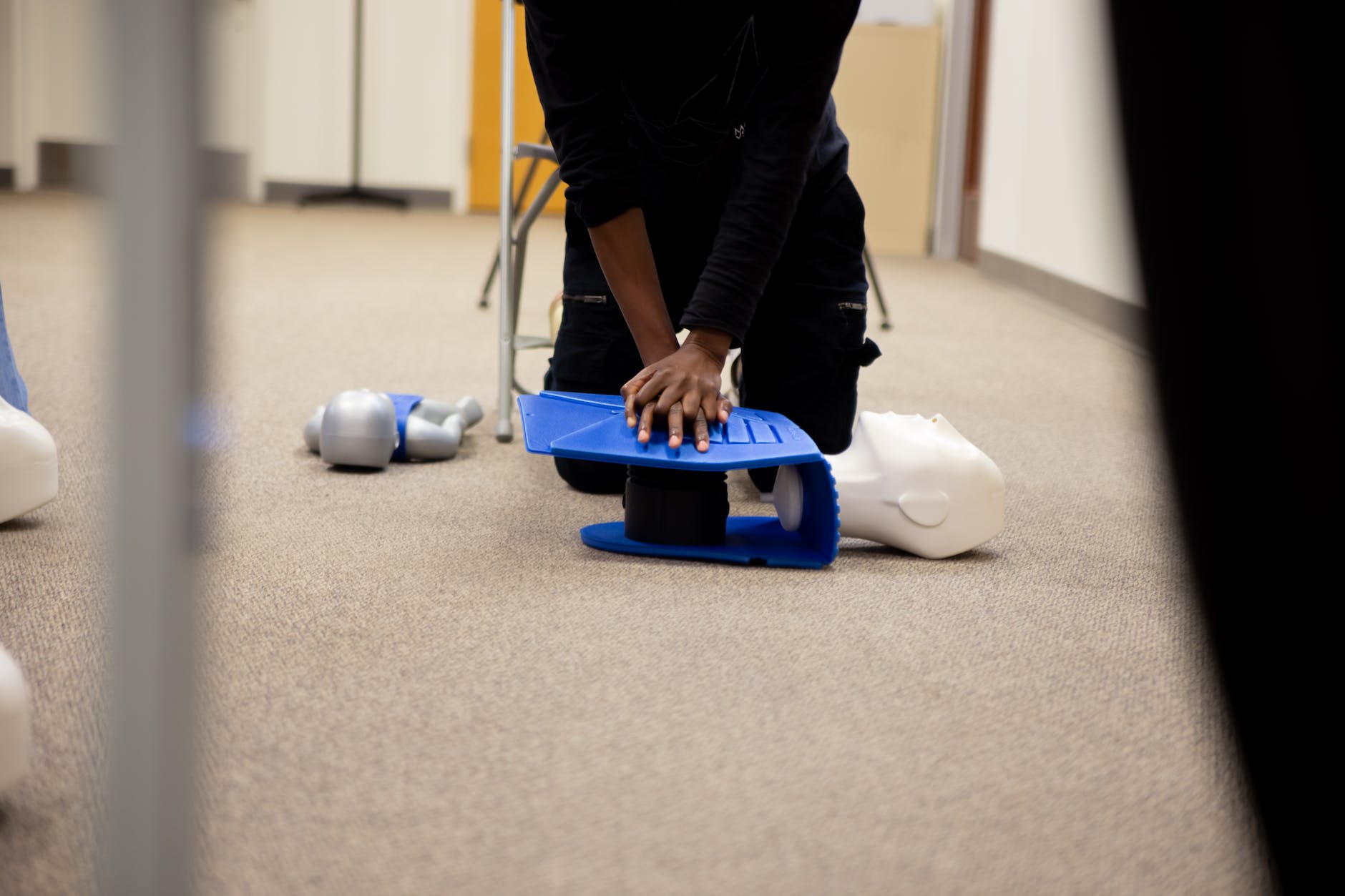
- Start Chest Compressions: Position yourself next to the person’s chest and place the heel of one hand on the center of their chest, with the other hand on top of the first. With your arms straight, push down firmly and quickly, aiming for a depth of about 2 inches. Count out loud as you perform compressions, aiming for a rate of 100-120 compressions per minute.
- Administer Rescue Breaths: After 30 chest compressions, tilt the person’s head back slightly and lift their chin. Pinch their nose closed with your fingers and give two full breaths into their mouth, making sure their chest rises with each breath.
- Repeat the Cycle: Continue to alternate between 30 chest compressions and two rescue breaths until emergency services arrive, or until the person starts breathing on their own.
Performing CPR can be physically and emotionally demanding, and it is important to receive proper training and certification to ensure that you can perform it correctly in an emergency situation. Remember to stay calm, focused, and confident, and to prioritize the safety of both yourself and the person in need of assistance.
This is just a reminder and not actual medical advice. It is recommended to look into first aid and CPR certification in your area to be able to efficiently perform these potential life saving duties!
 A Family Day